






Introduction
Quality control has been the backbone of manufacturing for over a century. From the assembly lines of Henry Ford to the precision workshops of modern automotive giants, the fundamental goal has remained unchanged: produce defect-free products consistently. However, the methods have evolved dramatically, and we stand at the threshold of a revolution powered by artificial intelligence.
In 2026, AI-driven quality control systems are no longer futuristic concepts—they are operational necessities. Manufacturing facilities worldwide are deploying machine learning algorithms, computer vision systems, and IoT sensors to detect defects with unprecedented accuracy. These systems don't just find flaws; they predict them before they occur, preventing costly recalls and customer dissatisfaction.
The statistics are compelling. Companies implementing AI quality control report defect detection rates exceeding 99.5%, compared to 85-95% for traditional manual inspection. Cost savings range from 30-50%, while production speeds increase by 20-40%. For an industry where precision determines profitability, AI in quality control is no longer optional—it's competitive survival.
This comprehensive guide explores how AI transforms quality assurance, the technologies driving this transformation, real-world applications across industries, and the future trajectory of manufacturing excellence.

Traditional Quality Control vs AI: The Paradigm Shift
The Limitations of Manual Inspection
For decades, manufacturers relied on human inspectors to examine products. A trained quality control specialist would visually inspect items on production lines, measuring dimensions, checking surface finishes, and identifying defects. While humans possess remarkable pattern recognition abilities, they face inherent limitations.
Human inspectors tire. After 4-6 hours of concentrated visual inspection, attention span deteriorates, and defect detection rates drop sharply. Subjectivity introduces inconsistency—one inspector might accept a product another would reject. Training requirements are substantial, onboarding times extend to months, and staff turnover creates continuity challenges.
Scaling manual inspection proves economically impractical. Inspecting 1,000 units per hour requires proportional workforce expansion. For high-volume manufacturing, the labor costs become prohibitive. A single automotive plant producing 500,000 vehicles annually would require hundreds of full-time quality inspectors, representing millions in annual expenses.
Furthermore, manual inspection can only detect visible defects. Internal flaws, microscopic cracks, and structural weaknesses remain undetected until the product fails in the field, resulting in recalls, warranty claims, and irreparable brand damage.
How AI Revolutionizes Quality Control
Artificial intelligence addresses every limitation of manual inspection. AI systems don't experience fatigue—they maintain 99.9% consistency across 24-hour operations. They detect defects humans cannot see: micro-fractures at 0.1mm precision, thermal anomalies imperceptible to the naked eye, and structural weaknesses invisible to surface inspection.
Machine learning algorithms improve continuously. Unlike humans, whose performance plateaus, AI models learn from every inspected unit, becoming more accurate over time. A system starting at 97% accuracy might reach 99.7% within weeks of deployment, with marginal improvements continuing indefinitely.
Integration with production data enables predictive capabilities. AI doesn't wait for defects to appear—it analyzes equipment performance, material properties, and environmental conditions to predict failures before they occur. This shift from reactive detection to predictive prevention represents a fundamental advancement in manufacturing philosophy.
Cost economics overwhelmingly favor AI. An AI quality control system costs $200,000-$500,000 to implement but replaces 15-25 full-time inspectors annually, delivering payback in 12-18 months. Over a 10-year lifespan, the savings compound dramatically.
How AI Detects Defects: The Technology Behind the Magic

Computer Vision: The Eyes of AI
Computer vision forms the foundation of visual defect detection. Industrial cameras capture images of products at 30-120 frames per second as items move along production lines. These cameras don't simply record images—they function as sophisticated sensors, capturing data across visible and infrared spectra.
The captured images undergo algorithmic analysis. Deep learning neural networks, trained on thousands of defective and non-defective product examples, analyze pixel-level data to identify anomalies. A convolutional neural network (CNN) might examine surface texture, edge detection, color consistency, and dimensional accuracy simultaneously.
Consider automotive paint inspection. A computer vision system analyzes each vehicle surface for imperfections invisible to human eyes: dust particles embedded in paint, micro-scratches from manufacturing equipment, color inconsistencies from temperature variations during application, and surface irregularities indicating underlying structural problems. The system captures images from multiple angles and lighting conditions, creating a comprehensive three-dimensional defect map.
The precision is remarkable. Modern systems detect defects as small as 0.2 millimeters—finer than a human hair. For semiconductor manufacturing, detection sensitivity reaches 10 nanometers, enabling identification of microscopic defects that would cause component failure.
Machine Learning Algorithms: The Brain of Detection
Behind every successful detection sits a trained machine learning model. These models undergo development through supervised learning, where engineers feed the algorithm thousands of labeled images—each marked as "defective" or "non-defective" with specific defect types identified.
The algorithm learns patterns. It discovers that certain pixel combinations indicate paint defects, specific edge characteristics signal structural cracks, and particular color distributions point to material contamination. Once trained, the model applies this knowledge to new, unseen products in real-time.
Transfer learning accelerates deployment. Rather than training from scratch, engineers use pre-trained models developed on large datasets (like ImageNet) and fine-tune them for specific manufacturing contexts. This approach reduces training time from months to weeks while improving accuracy.
Ensemble methods combine multiple models. Instead of relying on a single algorithm, manufacturers deploy committees of different neural network architectures, decision trees, and support vector machines. When consensus emerges among diverse models, confidence in the detection increases dramatically.
Real-Time Processing and Integration
Speed matters in manufacturing. Production lines move quickly—potentially processing 100+ units per minute. AI systems must analyze images and make accept/reject decisions within milliseconds, not seconds.
Edge computing enables real-time processing. Rather than sending images to distant servers, computing happens locally, at the inspection point itself. Specialized hardware accelerators—GPUs (graphics processing units) and TPUs (tensor processing units)—provide the computational power required for instant analysis.
Integration with production control systems closes the loop. When AI detects a defect, it communicates instantly with the production line. Robotic arms divert defective products to rework stations. The production process adjusts in real-time—slowing conveyor speeds if defect rates spike, triggering equipment maintenance if machinery shows signs of degradation.
Types of AI Defect Detection Systems
Visual Inspection Systems
Visual AI systems dominate modern manufacturing. They analyze product appearance for scratches, dents, discoloration, surface contamination, dimensional deviations, and assembly errors.
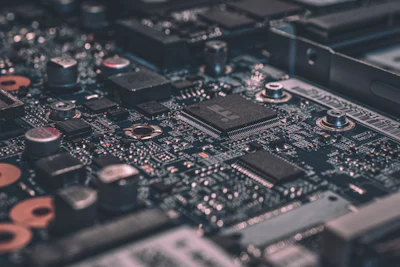
In electronics manufacturing, visual systems inspect circuit boards for component placement accuracy, solder joint quality, connector alignment, and trace continuity. Defect detection includes missing components (a chip that should be there isn't), misaligned components (a chip rotated incorrectly), cold solder joints (inadequate electrical connections), and shorts (unwanted electrical connections between traces).
Food and beverage production employs visual systems to detect packaging defects, fill level inconsistencies, label misalignment, and foreign object contamination. A system inspecting bottled beverages checks fill accuracy to the milliliter, detects particles suspended in liquid, identifies bottle cracks, and verifies cap sealing integrity.
Pharmaceutical manufacturing represents perhaps the most stringent application. Visual systems inspect tablet surfaces for cracks, discoloration, and imprinting errors; examine filled vials for particulate matter, cloudiness, and seal integrity; and verify packaging compliance with serialization requirements.
Sensor-Based Detection Systems
Beyond cameras, AI leverages diverse sensor data. Temperature sensors detect thermal anomalies indicating equipment malfunction or material defects. Vibration sensors identify bearing wear, misalignment, or mechanical stress. Acoustic sensors detect unusual sounds suggesting imminent equipment failure.
IoT sensor networks pervade modern manufacturing plants. Hundreds of sensors embedded throughout production equipment stream continuous data—temperature, pressure, vibration, humidity, electrical current draw—into centralized AI systems. Machine learning models analyze this multidimensional data to detect patterns indicating problems.
Ultrasonic sensors detect internal defects invisible to cameras. Ultrasonic waves penetrate materials, and returning echoes reveal voids, cracks, and material inconsistencies. AI algorithms interpret these echo patterns, identifying structural defects with precision impossible through visual inspection alone.
X-ray and thermal imaging systems reveal hidden defects. X-ray imaging penetrates assembled products, revealing internal component placement, solder joint quality, and structural integrity. Thermal imaging detects temperature variations indicating electrical faults, poor thermal management, or material degradation.
Predictive AI Systems
The most advanced systems transcend defect detection, entering predictive territory. These systems analyze equipment performance trends, identifying degradation patterns that precede failures.
A predictive system monitoring automotive welding robots doesn't wait for weld quality to decline—it monitors robot positioning accuracy, electrode wear, electrical current consistency, and mechanical stress. When measurements deviate from expected ranges, the system flags the equipment for preemptive maintenance before weld quality suffers.
Predictive systems analyzing material properties determine optimal production parameters. If ambient humidity rises, affecting material properties, the system automatically adjusts temperature, pressure, and processing times to maintain consistent output quality.
Anomaly detection algorithms identify unusual patterns. If a material batch shows properties deviating from historical norms, the system flags the batch for investigation. Often, these early warnings prevent downstream defects entirely.
Real-World Applications Across Industries
Automotive Manufacturing
The automotive industry pioneered AI quality control. Modern vehicles contain 30,000+ components, with precision tolerances measured in fractions of millimeters. A single defect can trigger recalls affecting millions of vehicles and costing billions.
Tesla's gigafactories employ extensive AI quality systems. Computer vision inspects body panels for dents and paint defects. Sensor networks monitor welding robot performance, ensuring consistent joint strength. Thermal cameras detect electrical connection issues before assembly completes. The result: defect rates 40-50% below industry averages, with fewer recalls and superior customer satisfaction.
Traditional automakers follow suit. BMW's production facilities deploy AI quality systems across assembly lines. After painting, computer vision systems inspect vehicle surfaces from multiple angles under varied lighting. AI detects scratches, dust particles, and color inconsistencies measured in micrometers. Defects trigger immediate rework, preventing out-of-specification vehicles reaching customers.
Electronics Manufacturing
Circuit board assembly demands extraordinary precision. Components measuring millimeters must be positioned accurately to the tenth of a millimeter. Solder joints require precise composition and temperature profiles. Any deviation risks device failure.
AI-powered optical inspection systems examine component placement accuracy, detecting misaligned components, missing parts, and incorrect component types. The systems inspect solder joints for adequate material, proper wetting, and absence of bridges between conductors.
Smartphone manufacturers use AI extensively. A phone assembly line produces 500,000 units daily. Computer vision systems inspect screen alignment, button responsiveness, camera lens clarity, and connector integrity. When AI detects defects, products divert to rework stations or scrap. The defect rate remains below 0.1%, with most phones reaching customers in perfect condition.
Pharmaceutical and Food Production
In pharmaceuticals, quality standards approach perfection. A single contaminated tablet could sicken patients. AI quality systems inspect every tablet for cracks, discoloration, and imprinting accuracy. Vials undergo inspection for particulate matter, cloudiness, and container integrity.
Food production employs AI to detect foreign objects—glass, metal, stones—that endanger consumers. Visual systems inspect food products, detecting spoilage, mold, discoloration, and packaging defects. X-ray systems detect internal contamination invisible to cameras.
A major beverage producer inspects every bottle. Computer vision verifies fill levels (overfilled or underfilled bottles are defects), detects cracks in glass that might shatter during transport, and confirms label placement and clarity. Millions of bottles daily pass through this inspection.
Aerospace Manufacturing
Aerospace demands the highest precision. Aircraft components operate under extreme stress, temperature, and pressure. Failures risk human lives. Tolerance specifications are extraordinarily tight—often within 0.01 millimeters.
AI quality systems inspect aircraft components for dimensional accuracy, surface finish, and material consistency. Ultrasonic inspection detects internal cracks invisible to X-rays. Thermal analysis confirms material composition and integrity. Multiple inspection systems verify each component before assembly, and assembled sub-assemblies undergo comprehensive re-inspection.
The cost of a single aircraft defect is immense—potentially exceeding $100 million in recalls and liability. AI quality systems justify high implementation costs through defect prevention.
Benefits of AI Quality Control
Superior Accuracy
AI systems achieve defect detection rates exceeding 99.5%, compared to 85-95% for manual inspection. This improvement stems from consistency (AI doesn't experience fatigue), sensitivity (detection of defects humans cannot see), and comprehensiveness (simultaneous analysis of multiple parameters).
For manufacturers, this accuracy translates directly to customer satisfaction. Fewer defects reach customers, reducing warranty claims, returns, and negative reviews. Brand reputation improves, supporting premium pricing and customer loyalty.
Dramatic Cost Reduction
While implementation requires significant capital investment ($200,000-$500,000), operating costs plummet. An AI system replaces 15-25 inspectors, each costing $40,000-$50,000 annually in salary and benefits. Over a 10-year lifespan, cost savings exceed $7-12 million per system.
Beyond direct labor savings, defect prevention reduces costs dramatically. A single vehicle recall costs manufacturers $500 million-$2 billion. Preventing even one major recall justifies the AI investment many times over.
Real-Time Responsiveness
AI enables instant response to emerging defects. When quality degrades, the system detects it immediately, alerts operators, and triggers corrective actions. This responsiveness prevents extended production runs of defective products.
Compare this to manual inspection: a defect might go undetected for hours, with hundreds of defective units produced before discovery. The AI advantage compounds dramatically over time.
Continuous Improvement
Machine learning models improve continuously. Each inspected unit contributes data refining the model's accuracy. Performance metrics show consistent improvement—often 0.5-2% monthly accuracy gains during the first year of deployment.
This contrasts sharply with humans, whose performance plateaus and often declines over time due to fatigue and complacency.
Data-Driven Insights
AI quality systems generate rich data revealing production trends. Which equipment produces defects most frequently? Do certain operator shifts correlate with higher defect rates? Do particular material batches show higher defect propensity?
This data enables targeted improvements. Maintenance becomes preventive rather than reactive. Equipment replacement occurs before failures rather than after. Production parameters optimize based on empirical data rather than guesswork.
Challenges and Limitations
Implementation Complexity
Deploying AI quality systems requires expertise spanning machine learning, manufacturing engineering, software integration, and system architecture. Many manufacturers lack internal expertise, requiring expensive external consultants. Integration with legacy production systems presents compatibility challenges.
Initial setup extends 3-6 months from system selection to full deployment. During this period, production might experience disruptions as equipment integrates with AI systems.
Data Quality Requirements
Machine learning models reflect training data quality. If training data contains mislabeled examples (defective products labeled non-defective), the deployed model perpetuates these errors. Generating high-quality training datasets requires careful manual inspection and labeling—precisely the tedious process AI was supposed to eliminate.
For new product types, historical data doesn't exist. Engineers must manually inspect and label thousands of examples before AI training begins, delaying deployment.
High Initial Investment
Implementation costs intimidate smaller manufacturers. A $300,000 system represents substantial capital for a mid-sized facility. While 12-18 month payback periods are common, cash flow constraints might prohibit investment despite favorable long-term economics.
Interpretability Challenges
Deep learning models function as "black boxes"—the internal logic determining classifications remains opaque. When an AI system rejects a product, explaining why proves difficult. This opacity creates friction with quality managers accustomed to understanding inspection logic.
Emerging explainable AI (XAI) techniques address this limitation, but implementation adds complexity.
Future of AI in Quality Control (2026-2030)
Advanced Robotics Integration
Future systems won't just detect and reject defects—they'll repair them autonomously. Robotic arms equipped with AI vision systems will identify defective products, precisely remove faulty components, and install replacements. This approach reduces scrap and rework labor costs.
Collaborative robots (cobots) will work alongside humans, performing routine inspection tasks while humans handle complex judgment calls. This human-AI teaming combines machine precision with human intuition.
Quantum Computing Applications
Quantum computers will process defect detection algorithms exponentially faster than classical computers. Defect analysis currently requiring milliseconds might execute in microseconds, enabling inspection of even faster production lines.
Expanded Sensory Integration
Future systems will integrate data from disparate sensors—cameras, thermal, ultrasonic, acoustic, vibration—into unified AI models. Rather than analyzing each data stream separately, comprehensive models process multidimensional data simultaneously, extracting insights individual modalities miss.
Industry 5.0 Convergence
Industry 5.0 emphasizes human-centric manufacturing where AI augments rather than replaces human workers. Quality control will evolve toward human-AI collaboration. AI systems handle high-volume, routine inspections while humans address edge cases and make strategic decisions.
Conclusion
AI in quality control represents a fundamental transformation in manufacturing. From detecting microscopic defects invisible to humans to predicting equipment failures before they occur, AI enables manufacturing precision previously impossible.
The evidence is compelling. Implemented systems achieve 99.5%+ defect detection, reduce costs by 30-50%, and improve production consistency dramatically. Early adopters gain competitive advantages in quality, cost, and customer satisfaction that compound over years.
For manufacturers navigating 2026's competitive landscape, the question isn't whether to implement AI quality control—it's how quickly they can deploy it. The window for competitive advantage narrows as AI adoption becomes industry standard. Forward-thinking manufacturers investing now will dominate their markets, while stragglers risk obsolescence.
The future of manufacturing isn't human inspection or AI inspection—it's seamless integration of both, combining human judgment with machine precision to achieve unprecedented quality and efficiency.
Read More Topics:
E20 vs Petrol: The Ultimate Guide to Fuel Efficiency, Engine Care, and Costs
Is Ethanol-to-Jet the Next Big Greenwash? SAF Mandates and the Ethanol Lobby's New Frontier.
Ethanol's Hidden Empire: Who Really Controls the Green Fuel Gold Rush — and Who Pays the Price.
Ethanol vs Electric Vehicles vs Hydrogen Fuel: Which is the Future of Sustainable Transportation
Green Manufacturing and Sustainable Engineering: Building the Future of Eco-Friendly Industries.
Hydrogen Fuel: The Future of Clean Energy and Sustainable Transportation.
Artificial Intelligence and Hyper-Automation: Transforming the Future of Business and Industry.
Evolution of Quality Control: From Manual Inspection to Intelligent Quality Management.
Ethanol Fuel: How It Is Produced, Its Advantages, Disadvantages, and Future Potential

No comments:
Post a Comment
Please do not enter any spam link in the comment box