





Introduction
The manufacturing industry has undergone remarkable transformations over the past few centuries. From steam-powered machines during the First Industrial Revolution to today's smart factories driven by Artificial Intelligence (AI), each industrial revolution has significantly changed the way products are designed, manufactured, and delivered.
In recent years, Industry 4.0 introduced advanced technologies such as the Internet of Things (IoT), Artificial Intelligence, Cloud Computing, Big Data Analytics, and Automation. While Industry 4.0 primarily focused on connecting machines and optimising production processes, a new industrial paradigm is emerging—Industry 5.0.
Industry 5.0 represents a shift from purely automation-driven manufacturing toward a more human-centric approach where humans and intelligent machines collaborate to create sustainable, resilient, and highly personalised production systems.
This new revolution aims to combine the creativity, problem-solving ability, and experience of human workers with the precision, speed, and efficiency of advanced technologies. As industries worldwide strive to balance productivity with sustainability and worker well-being, Industry 5.0 is becoming a key topic in modern manufacturing.
What is Industry 5.0?
Industry 5.0 is the next stage of industrial evolution that focuses on collaboration between humans and intelligent machines.
Unlike Industry 4.0, which emphasised automation and machine-to-machine communication, Industry 5.0 places humans at the centre of manufacturing processes.
The European Commission defines Industry 5.0 as an approach that goes beyond efficiency and productivity by focusing on:
- Human-centricity
- Sustainability
- Resilience
The primary objective is not to replace humans with machines but to empower workers using advanced technologies.
In Industry 5.0 environments:
- Humans and robots work together.
- AI supports human decision-making.
- Manufacturing becomes more sustainable.
- Production systems become more adaptable and resilient.

Evolution of Industrial Revolutions
Understanding Industry 5.0 requires examining the journey of industrial development.
Industry 1.0 (1780s)
The First Industrial Revolution introduced mechanisation using water and steam power.
Key Features:
- Steam engines
- Mechanical production
- Textile machinery
Benefits:
- Increased production
- Reduced manual labor
Industry 2.0 (1870s)
The Second Industrial Revolution introduced electricity and mass production.
Key Features:
- Assembly lines
- Electrical power
- Mass manufacturing
Benefits:
- Higher productivity
- Lower production costs
Industry 3.0 (1970s)
The Third Industrial Revolution brought electronics and computerisation.
Key Features:
- PLCs (Programmable Logic Controllers)
- Industrial computers
- Automation systems
Benefits:
- Improved precision
- Reduced human errors
Industry 4.0 (2010s)
Industry 4.0 focused on digital transformation.
Key Technologies:
- Artificial Intelligence
- Internet of Things (IoT)
- Big Data
- Cloud Computing
Benefits:
- Smart factories
- Predictive maintenance
- Real-time monitoring
Industry 5.0 (Present and Future)
Industry 5.0 integrates human intelligence with advanced technologies.
Focus Areas:
- Human-machine collaboration
- Sustainable production
- Personalized manufacturing
Core Principles of Industry 5.0
1. Human-Centric Manufacturing
Humans remain at the centre of industrial processes.
Rather than replacing workers, Industry 5.0 seeks to:
- Enhance worker capabilities
- Improve workplace safety
- Increase job satisfaction
Workers become partners with technology rather than competitors.
2. Sustainability
Modern industries must reduce their environmental impact.
Industry 5.0 promotes:
- Energy efficiency
- Waste reduction
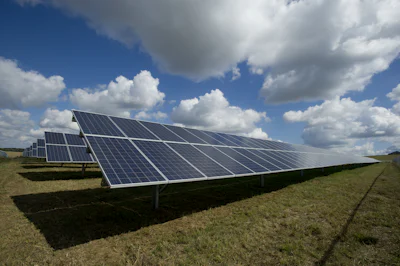
- Renewable energy integration
- Circular economy practices
3. Resilience
Manufacturing systems must adapt quickly to disruptions.
Industry 5.0 focuses on:
- Supply chain resilience
- Flexible production
- Rapid response capabilities
This became especially important following global disruptions such as pandemics and supply chain crises.
Key Technologies of Industry 5.0
Artificial Intelligence (AI)
AI enables machines to:
- Analyse large datasets
- Predict failures
- Optimize operations
- Support decision-making
Applications include:
- Predictive maintenance
- Quality inspection
- Production planning
Collaborative Robots (Cobots)
Unlike traditional industrial robots, cobots work safely alongside humans.
Benefits:
- Increased productivity
- Improved safety
- Enhanced flexibility
Cobots assist workers rather than replace them.
Internet of Things (IoT)
IoT connects machines, sensors, and systems.
Benefits:
- Real-time monitoring
- Data collection
- Equipment tracking
Digital Twins
A Digital Twin is a virtual representation of a physical system.
Benefits:
- Simulation
- Performance optimization
- Predictive analysis
Manufacturers can test scenarios digitally before implementing changes in real factories.
Big Data Analytics
Industrial systems generate vast amounts of data.
Big Data helps:
- Identify patterns
- Improve efficiency
- Predict future outcomes
Cloud Computing
Cloud technology enables:
- Remote monitoring
- Data sharing
- Scalable infrastructure
Factories can access information from anywhere in the world.
Industry 4.0 vs Industry 5.0
| Feature | Industry 4.0 | Industry 5.0 |
|---|---|---|
| Focus | Automation | Human Collaboration |
| Objective | Efficiency | Human-Centric Manufacturing |
| Worker Role | Operator | Collaborator |
| Technology | Smart Machines | Human + Smart Machines |
| Sustainability | Secondary | Core Focus |
| Customization | Moderate | High |
| Decision Making | Data Driven | Human + AI Driven |
Benefits of Industry 5.0
Increased Productivity
Humans and machines complement each other's strengths.
Machines handle repetitive tasks while humans focus on creativity and problem-solving.
Improved Product Quality
AI systems and skilled workers together ensure higher quality standards.
Benefits:
- Fewer defects
- Better consistency
- Improved customer satisfaction
Greater Customization
Customers increasingly demand personalised products.
Industry 5.0 enables:
- Mass customization
- Flexible production
- Faster design changes
Enhanced Worker Safety
Advanced technologies improve workplace safety through:
- Smart sensors
- Cobots
- Real-time monitoring
Hazardous tasks can be assigned to machines.
Sustainability Improvements
Industry 5.0 promotes:
- Resource optimization
- Reduced emissions
- Lower energy consumption
Applications of Industry 5.0
Automotive Industry
Applications include:
- Human-robot assembly lines
- AI-powered quality inspection
- Customized vehicle production
Major automobile manufacturers are already adopting Industry 5.0 principles.
Aerospace Industry
Benefits include:
- Precision manufacturing
- Predictive maintenance
- Digital twin simulations
Healthcare Industry
Applications:
- Medical device manufacturing
- Personalised healthcare products
- Smart production systems
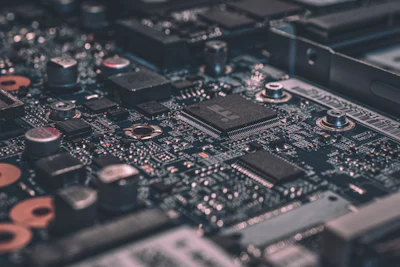
Electronics Manufacturing
Benefits:
- Flexible assembly
- Improved quality control
- Rapid product development
Challenges of Industry 5.0
High Initial Investment
Implementing advanced technologies requires significant capital.
Costs include:
- Hardware
- Software
- Infrastructure upgrades
Skills Gap
Workers need training in:
- AI
- Robotics
- Data Analytics
- Digital Technologies
Continuous learning becomes essential.
Cybersecurity Risks
Connected systems increase cybersecurity challenges.
Organisations must invest in:
- Network security
- Data protection
- Threat monitoring
Integration Complexity
Combining humans, machines, and digital systems can be technically challenging.
Proper planning and implementation strategies are necessary.
Future of Industry 5.0
Industry 5.0 is expected to transform manufacturing over the coming decades.
Future trends include:
- Advanced AI assistants
- Smarter cobots
- Sustainable factories
- Hyper-personalised production
- Fully integrated digital twins
As technology continues to evolve, factories will become more intelligent, flexible, and environmentally responsible.
Human workers will continue playing a critical role by providing creativity, innovation, emotional intelligence, and strategic thinking.
The future factory will not be fully automated—it will be a collaborative environment where humans and machines work together to achieve unprecedented levels of productivity and sustainability.
Key Takeaways
- Industry 5.0 focuses on human-machine collaboration.
- Sustainability and resilience are core objectives.
- AI, Cobots, Digital Twins, and IoT are key technologies.
- Workers remain central to manufacturing processes.
- Industry 5.0 enables greater customisation and innovation.
- The future of manufacturing will combine human creativity with machine intelligence.
Frequently Asked Questions (FAQs)
What is Industry 5.0?
Industry 5.0 is a manufacturing approach that combines human creativity with advanced technologies such as AI, robotics, and IoT to create sustainable and human-centric production systems.
How is Industry 5.0 different from Industry 4.0?
Industry 4.0 focuses on automation and connectivity, while Industry 5.0 emphasises collaboration between humans and intelligent machines.
What are Cobots?
Cobots, or Collaborative Robots, are robots designed to safely work alongside human workers.
Why is Industry 5.0 important?
It improves productivity, sustainability, worker well-being, and manufacturing resilience.
Which industries use Industry 5.0?
Automotive, aerospace, electronics, healthcare, and advanced manufacturing industries are adopting Industry 5.0 technologies.
Conclusion
Industry 5.0 represents the future of manufacturing by placing humans back at the centre of industrial innovation. Instead of replacing workers with machines, it creates a collaborative ecosystem where human creativity and machine intelligence work together.
By focusing on sustainability, resilience, and human-centric production, Industry 5.0 has the potential to redefine modern manufacturing and create a smarter, safer, and more sustainable industrial future. As industries continue to evolve, organisations that embrace Industry 5.0 will be better positioned to compete in the rapidly changing global marketplace.

No comments:
Post a Comment
Please do not enter any spam link in the comment box